
Where Legacy Meets Luxury
A Family Atelier, Artisan Made
From a single stitch to a lasting heirloom, every piece is crafted with intention.
Atelier de Rys began not as a business idea, but as a search for a more considered way of making.
What started in quiet hours, with a small number of leather objects shaped through patience and intention, gradually became something more enduring: a distinct point of view on what everyday objects should be.
From the beginning, the aim was never simply to make leather goods or wooden pieces. It was to create objects that feel composed—objects chosen not for novelty, but for what they continue to offer over time. A wallet becomes familiar in the hand. A tray becomes part of a daily ritual. A box becomes something kept, not discarded.
That belief became the foundation of Atelier de Rys.
The collection evolved slowly, through refinement rather than expansion. Material by material. Form by form. A language emerged—one shaped by restraint, permanence, and quiet distinction.
Today, Atelier de Rys creates refined leather and wood objects for those who value fewer things, chosen well.
Not made to fill space. Made to belong.
The Emblem
The Atelier de Rys emblem is designed in the same spirit as the objects themselves: restrained, deliberate, and quietly resolute.
Its shield form speaks to permanence, protection, and character. It is not intended as ornament, but as a mark of intent—a symbol of discipline, continuity, and the values that shape the work.
A mark of restraint. A symbol of permanence.
We believe the objects we live with shape the quality of our days.
In a culture of speed, excess, and replacement, Atelier de Rys exists in deliberate contrast.
We create for those who prefer fewer things of greater meaning. For those who understand that ownership can be more thoughtful, more personal, and more enduring. Not everything needs to be collected. Some things simply need to be chosen well.
This is the philosophy behind the collection.
An object should not earn its place through novelty alone. It should earn it through presence, usefulness, and the quiet confidence of becoming more familiar over time. The pieces we return to most are rarely the loudest. They are the ones that remain.
That belief guides every decision—material, proportion, finish, and form. Leather is chosen for character, not uniformity. Wood is chosen for depth, not perfection. What matters is not only how something looks on arrival, but how it settles into a life.
Atelier de Rys is built around a simple conviction: that well-considered objects can bring more order, more ritual, and more meaning to the everyday.
We do not make to add more. We make to make what remains feel more intentional.
The arrival of an object should feel as considered as the object itself.
Atelier de Rys packaging is designed as part of the ownership experience—restrained in appearance, deliberate in gesture, and intended to be kept.
Each piece is presented in a matte black gift box finished with the Atelier de Rys mark. Clean in form and composed in presence, it is designed to feel at home long after the first opening. It is not treated as disposable packaging, but as part of the object’s arrival.
Inside, the piece is wrapped in a fine sheet of wax paper and sealed with the atelier wax seal. The gesture is simple, but intentional. A moment of pause. A quieter way of receiving.
Every order also includes a personal thank-you note from the atelier. Not as formality, but as acknowledgment—that what arrives has been chosen, prepared, and sent with care.
Whether selected for oneself or given to someone else, each piece is intended to arrive complete: composed, gift-ready, and free from excess.
Packaging should not compete with the object. It should prepare you to receive it.
A considered object deserves a considered arrival.
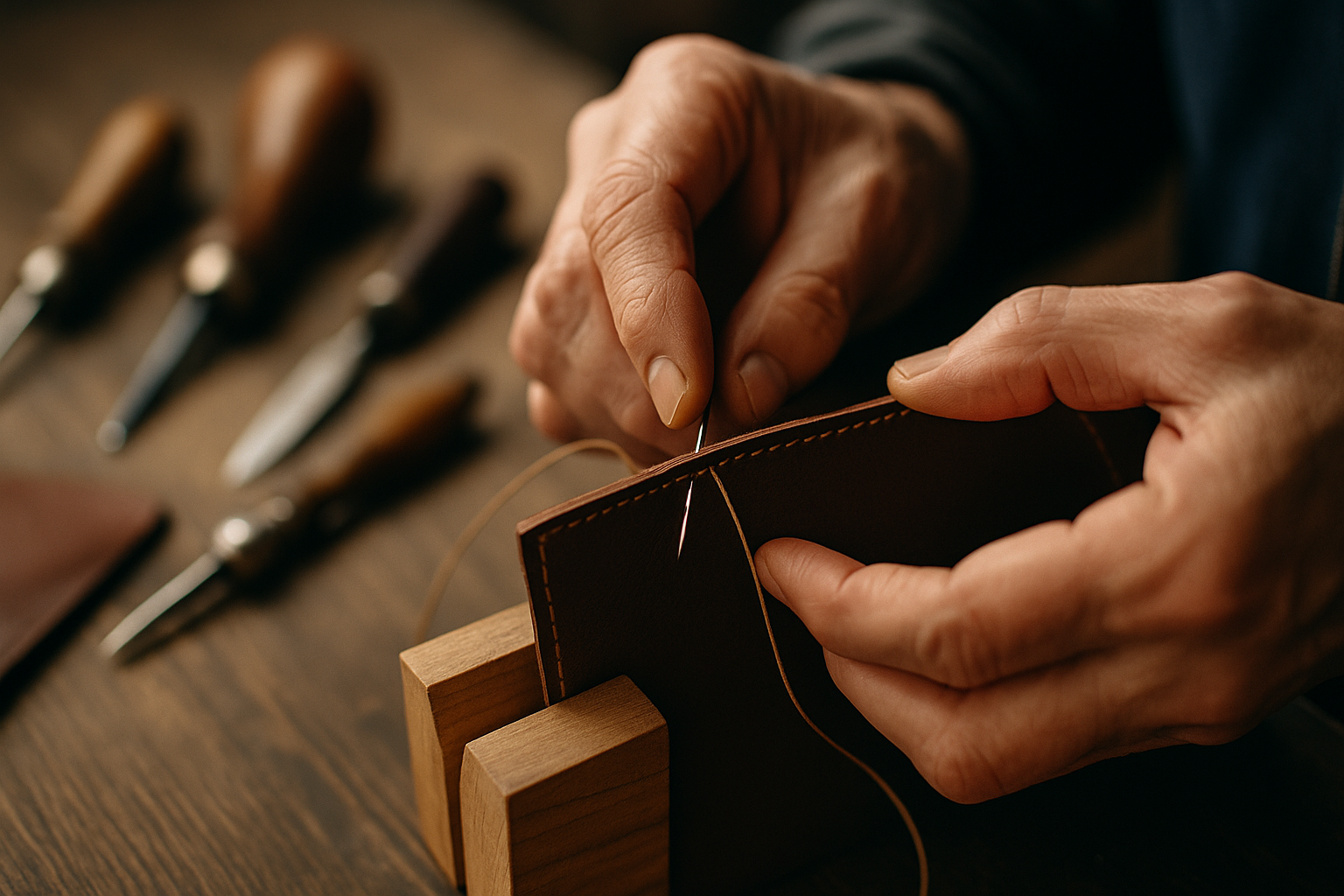
The process begins long before the object takes shape.
Atelier de Rys is built through discipline before it is built through technique.
Before a piece is made, its proportions must feel resolved. Its purpose must be clear. Its materials must speak in the right voice. The work is not to force identity onto an object, but to reveal the form that already belongs to it.
Leather and wood are approached differently, but with the same principle: respect for character. Natural variation is not treated as something to erase, but something to understand. Grain, density, markings, depth—these are not interruptions to the process. They are part of it.
Construction follows the same restraint. Edges are refined until they feel complete. Surfaces are finished for touch as much as appearance. Stitching, joinery, and assembly are approached with care, so the final object feels composed rather than overworked.
What matters most is not how much is done, but whether each step leaves the piece clearer, calmer, and more resolved.
This is why the process remains deliberate. Not to romanticize slowness, but because precision has its own pace.
Materials
Materials are chosen for how they will live, not simply how they appear on the first day.
We are drawn to leathers with depth and character, and to woods that retain warmth, structure, and natural presence. The aim is not surface perfection, but a finish that ages honestly and gains familiarity through use.
The process is not there to be admired. It is there to be felt in what remains.